
Property Management System
Managing properties manually can become complicated as a property portfolio grows.
A property owner, property management company, housing society, builder or real estate developer may need to maintain information about properties, owners, tenants, payments, rent, installments, maintenance, complaints, documents and financial transactions.
When these activities are managed through paper files, spreadsheets, separate accounting software and messaging applications, important information can become difficult to organize.
A property management system provides a centralized digital solution for managing property-related operations.
Instead of maintaining different records for different departments, organizations can use a property management system to connect property records, tenants, owners, billing, payments, accounting, maintenance, documentation and reporting in one platform.
For businesses operating in Pakistan, choosing the right property management system is particularly important because property operations can involve residential properties, commercial properties, rental units, housing societies, plots, files, installments and other property-related workflows.
Codify Services provides property management software, Housing society management software and real estate software designed to help organizations digitize property-related operations.
This comprehensive guide explains what a property management system is, how it works, its key features, benefits, use cases, implementation considerations, pricing factors and what businesses should look for when selecting property management software.
What Is a Property Management System?
A property management system is software used to organize, automate and manage the day-to-day operations associated with properties.
Depending on the type of business, a property management system can manage:
- Property records
- Property owners
- Tenants
- Rental agreements
- Lease information
- Rent collection
- Property billing
- Installments
- Payments
- Accounting
- Maintenance
- Complaints
- Property documents
- Vendors
- Staff
- Reports
- Communication
- Property-related transactions
The primary purpose is to replace fragmented manual processes with a centralized digital system.
For example, instead of searching through different Excel files to determine a property’s owner, payment history, outstanding balance and maintenance requests, authorized staff can access relevant information from a centralized system.
In simple terms:
A property management system is a centralized software platform that helps property owners, property managers, housing societies and real estate businesses manage properties, people, finances and operations efficiently.
How Does a Property Management System Work?
A property management system generally works by storing property and customer information in a centralized database and connecting different operational modules.
A typical workflow may look like this:
Property Created
↓
Owner/Tenant Added
↓
Agreement or Booking Recorded
↓
Billing or Installment Schedule Created
↓
Payment Recorded
↓
Ledger Updated
↓
Maintenance or Complaint Registered
↓
Task Assigned
↓
Issue Resolved
↓
Reports Generated
This connected workflow reduces the need to enter the same information into multiple systems.
Why Do Businesses Need a Property Management System?
Property management becomes increasingly difficult when the number of properties, tenants, owners or transactions increases.
A business managing five properties may be able to use spreadsheets.
A company managing hundreds or thousands of properties requires a more structured system.
Common problems with manual property management include:
Scattered Information
Property data may exist in different Excel files, paper documents, emails and messaging applications.
Payment Tracking Problems
Staff may spend significant time checking whether tenants, customers or property owners have made payments.
Manual Billing
Recurring rent, maintenance charges or other fees may require repetitive calculations.
Maintenance Delays
Maintenance requests can get lost when they are reported through informal channels.
Poor Reporting
Management may have difficulty producing accurate reports quickly.
Duplicate Data Entry
The same customer or property information may be entered into multiple spreadsheets.
Limited Accountability
Without user permissions and activity tracking, it can become difficult to determine who performed a particular operation.
Difficulty Scaling
Manual processes that work for a small portfolio can become inefficient as the business grows.
A property management system addresses these challenges by centralizing information and automating appropriate workflows.
Key Features of a Property Management System
The exact features vary between software providers, but a comprehensive property management platform may include the following modules.
Property Management
Property management is the foundation of the system.
Administrators can maintain records for:
- Residential properties
- Commercial properties
- Apartments
- Houses
- Shops
- Offices
- Plots
- Files
- Buildings
- Units
- Blocks
- Floors
- Streets
Each property can have associated information such as:
- Property number
- Location
- Size
- Category
- Status
- Owner
- Tenant
- Booking information
- Payment information
- Documents
- Maintenance history
This creates a centralized property database.
Property Inventory Management
Real estate companies and developers often manage large property inventories.
Property inventory management allows businesses to identify:
- Available properties
- Reserved properties
- Booked properties
- Sold properties
- Allocated properties
- Transferred properties
- Cancelled properties
This is particularly useful for developers managing multiple projects.
Instead of manually checking spreadsheets to determine property availability, authorized users can view current inventory through the system.
Tenant Management
Rental property businesses need accurate tenant records.
A tenant management module can maintain:
- Tenant name
- Contact information
- Property
- Lease information
- Rent
- Security deposit
- Lease start date
- Lease expiry date
- Payment history
- Outstanding amounts
- Documents
- Communication history
Centralized tenant records help property managers maintain organized information.
Owner Management
Property management companies may manage properties on behalf of multiple owners.
An owner management module can maintain:
- Owner profiles
- Properties owned
- Rental income
- Expenses
- Payments
- Statements
- Documents
- Historical information
This allows property managers to maintain separate records for different property owners.
Rental Management
Rental management is one of the most common uses of property management software.
A rental management system can help track:
- Rental properties
- Tenants
- Monthly rent
- Lease agreements
- Security deposits
- Due dates
- Paid amounts
- Outstanding rent
- Late payments
- Lease renewals
Automation can reduce the administrative effort required for recurring rental operations.
Rent Collection
Rent collection is a critical property management activity.
A property management system can maintain records of:
- Rent invoices
- Due dates
- Payments
- Outstanding amounts
- Late payments
- Payment history
- Tenant ledgers
Where supported, businesses can also integrate digital payment methods into their broader payment workflow.
The objective is to provide management with a clear view of rental collections.
Property Billing
Property billing can include several types of charges depending on the organization.
For example:
- Rent
- Maintenance
- Utilities
- Service charges
- Parking
- Security
- Other recurring charges
A centralized billing module can reduce manual calculations and provide a consistent billing process.
Property Accounting
Financial management is a critical part of professional property management.
A property management accounting module may support:
- Customer ledgers
- Owner accounts
- Tenant accounts
- Income
- Expenses
- Receivables
- Payables
- Receipts
- Payments
- Journal entries
- Cash transactions
- Bank transactions
- Financial reports
The biggest advantage of integrated accounting is that property transactions can be connected to financial records.
Installment Management
Property developers and housing societies frequently sell properties through installment plans.
An installment management module can help track:
- Customer
- Property
- Total price
- Down payment
- Installment amount
- Due date
- Paid amount
- Outstanding amount
- Late payment
- Payment history
This is especially useful for developers selling plots, apartments, houses or commercial units.
Payment Tracking
A property management system should provide a clear view of payment status.
Management can categorize transactions according to:
- Paid
- Partially paid
- Pending
- Overdue
- Cancelled
- Refunded
Payment history can be associated with the relevant customer, tenant, owner or property.
Customer and Property CRM
Property businesses often need CRM functionality alongside property management.
A real estate CRM can help manage:
- Leads
- Prospects
- Customers
- Follow-ups
- Sales representatives
- Property interests
- Bookings
- Customer interactions
For developers and real estate companies, connecting CRM with property inventory can provide a more complete sales workflow.
Property Booking
Property booking software can help businesses record:
- Customer information
- Property
- Booking date
- Booking amount
- Payment plan
- Installments
- Documents
- Sales representative
- Booking status
This is particularly useful for real estate developers and builders.
Maintenance Management
Properties require continuous maintenance.
A maintenance management module can track:
- Maintenance requests
- Work orders
- Assigned staff
- Vendors
- Contractors
- Costs
- Status
- Completion dates
For example:
Tenant reports plumbing issue
↓
Request registered
↓
Maintenance employee assigned
↓
Work completed
↓
Request closed
↓
Cost recorded
This creates a structured maintenance workflow.
Complaint Management
A property management system can also include complaint tracking.
Complaints may relate to:
- Maintenance
- Water
- Electricity
- Cleaning
- Security
- Common areas
- Noise
- Services
A structured complaint management system allows administrators to record, assign and monitor complaints.
This is especially useful for housing societies and residential communities.
Visitor Management
Visitor management is particularly relevant to gated communities and housing societies.
A visitor management system can record:
- Visitor information
- Vehicle information
- Entry time
- Exit time
- Resident
- Purpose of visit
- Security staff
- Visitor history
Digital visitor management can provide better visibility than traditional paper registers.
Property Transfer Management
Property ownership can change through:
- Sale
- Purchase
- Transfer
- Inheritance
- Cancellation
- Re-allocation
A property management system can maintain a history of ownership and transfer-related transactions.
The system can potentially store:
- Previous owner
- New owner
- Property
- Transfer date
- Transfer charges
- Required documents
- Approval status
This is particularly important for housing societies and property developers.
Document Management
Property businesses deal with significant amounts of documentation.
Documents may include:
- CNIC-related records
- Agreements
- Booking forms
- Transfer documents
- Lease agreements
- Receipts
- NOCs
- Ownership documents
- Payment records
A document management module can help organize digital records and make retrieval easier.
Organizations should also implement appropriate access controls for sensitive documents.
NOC and Approval Management
Housing societies and property organizations may need to manage different approvals.
Examples include:
- Property transfer NOCs
- Construction approvals
- Clearance certificates
- No-dues certificates
- Other administrative approvals
Digital workflows can help track the status of requests and maintain historical records.
Vendor Management
Property management often involves external vendors and contractors.
A vendor management module can help track:
- Vendor profiles
- Services
- Contracts
- Payments
- Work orders
- Expenses
- Performance
- Historical transactions
This is particularly valuable for property management companies and large residential communities.
Staff Management
Large property organizations may have multiple departments.
Examples include:
- Accounts
- Administration
- Maintenance
- Security
- Customer service
- Sales
- Recovery
Role-based access allows organizations to provide employees with access appropriate to their responsibilities.
For example, an accountant may require access to financial transactions while a security guard may only require access to visitor records.
Reports and Management Dashboard
Management needs information, not just data.
A property management system can provide dashboards and reports such as:
Property Reports
- Property inventory
- Occupancy
- Availability
- Ownership
- Property status
Financial Reports
- Revenue
- Expenses
- Receivables
- Payables
- Collections
Rental Reports
- Rent collected
- Outstanding rent
- Overdue accounts
- Lease expiry
Maintenance Reports
- Open requests
- Completed requests
- Pending work
- Maintenance expenses
Customer Reports
- Customer activity
- Bookings
- Payments
- Outstanding balances
Management dashboards help decision-makers understand business performance without manually compiling information from different files.
Property Management System for Housing Societies
Housing societies have requirements that differ from traditional rental property management.
A housing society may need to manage:
- Plots
- Files
- Members
- Residents
- Owners
- Installments
- Maintenance charges
- Utility billing
- Complaints
- Visitors
- Property transfers
- NOCs
- Accounting
- Recovery
- Notices
Therefore, a property management system for a housing society should be designed around the society’s actual operational structure.
This is where a housing society management software solution becomes particularly valuable.
Instead of treating every property as simply a rental unit, the system can connect property records with members, payments, accounting, administrative workflows and community services.
Property Management System for Real Estate Developers
Real estate developers have a different set of requirements.
They may need:
- Project management
- Property inventory
- Plot management
- Booking
- Customer management
- Installments
- Recovery
- Dealer management
- Commission management
- Accounting
- Sales reporting
- Property transfers
- Documentation
A property management system can connect the sales process with financial and property records.
For example:
Lead
↓
Customer
↓
Property Selection
↓
Booking
↓
Installment Plan
↓
Payment
↓
Ledger
↓
Possession / Transfer
This provides a more complete real estate management workflow.
Property Management System for Property Management Companies
Property management companies may manage properties belonging to different owners.
Their system needs to provide clear separation between:
- Property
- Owner
- Tenant
- Rent
- Expenses
- Maintenance
- Management fees
- Payments
- Reports
A centralized platform can make it easier to manage multiple properties and generate owner-specific information.
Property Management System for Commercial Properties
Commercial properties can include:
- Shops
- Offices
- Business centers
- Warehouses
- Commercial buildings
- Retail spaces
Commercial property management often involves:
- Lease management
- Rent
- Service charges
- Utility charges
- Maintenance
- Tenant records
- Contracts
- Expenses
- Occupancy
A property management system can help centralize these operations.
Property Management System for Apartment Communities
Apartment communities can use property management software to manage:
- Apartments
- Owners
- Residents
- Tenants
- Maintenance
- Billing
- Complaints
- Parking
- Visitors
- Common facilities
This can provide residents and management with a more structured digital experience.
Property Management System vs Excel
Many organizations begin property management with Excel.
Excel is useful for basic record keeping, but it becomes increasingly difficult to manage as operations become more complex.
| Requirement | Excel | Property Management System |
|---|---|---|
| Property records | Manual | Centralized |
| Tenant records | Manual | Structured |
| Rent tracking | Manual | Automated workflows |
| Billing | Formulas/manual | System-based |
| Accounting | Often separate | Can be integrated |
| Maintenance | Manual | Workflow-based |
| Complaints | Manual | Trackable |
| Documents | Separate files | Centralized |
| Reports | Manual | Automated |
| User permissions | Limited | Role-based |
| Scalability | Limited | Higher |
| Auditability | Difficult | Better with activity controls |
The purpose of property management software is not simply to replace Excel.
It is to provide an integrated operational system that connects different business processes.
Benefits of a Property Management System
1. Centralized Information
Property, tenant, owner and financial information can be managed from one platform.
2. Reduced Manual Work
Automation can reduce repetitive administrative tasks.
3. Better Accuracy
Centralized workflows can reduce duplicate data entry and calculation errors.
4. Faster Reporting
Management can access reports without manually compiling data from multiple files.
5. Better Payment Tracking
Outstanding payments and transaction histories become easier to monitor.
6. Improved Maintenance Management
Requests can be assigned and tracked systematically.
7. Better Customer Service
Customers and residents can receive faster responses when their information is easily accessible.
8. Improved Accountability
Role-based permissions and activity records can improve operational control.
9. Better Scalability
A centralized system can support organizations as their property portfolio grows.
10. Data-Driven Decision Making
Management can use reports and dashboards to make decisions based on current information.
What Is the Difference Between Property Management Software and a Property Management System?
The terms property management software and property management system are often used interchangeably.
In practical terms, both refer to digital tools used to manage property-related activities.
However, “property management system” can imply a broader integrated platform containing multiple modules.
For example:
Property Management System
→ Property Management
→ Tenant Management
→ Billing
→ Accounting
→ Maintenance
→ CRM
→ Reporting
→ Documents
→ Payments
A simple property management application may only perform one or two functions.
Therefore, organizations should evaluate the actual modules rather than relying on the terminology used by the vendor.
Cloud-Based Property Management System
A cloud-based property management system is hosted on cloud infrastructure rather than being limited to a single local computer.
Potential advantages include:
- Remote access
- Centralized data
- Easier updates
- Scalability
- Multi-user access
- Centralized backup processes
However, organizations should evaluate:
- Hosting architecture
- Security
- Backup procedures
- User authentication
- Data ownership
- Availability
- Support
- Disaster recovery
Cloud software is not automatically secure simply because it is cloud-based. Security depends on how the system and infrastructure are designed and managed.
Mobile Property Management
Mobile access is increasingly important for property businesses.
A mobile application can potentially allow users to:
- View property information
- Check payments
- Submit complaints
- Track maintenance
- Receive notifications
- Access documents
- Communicate with management
For residents and field teams, mobile access can make property operations more convenient.
Property Management Automation
Automation can improve repetitive workflows.
Examples include:
Rent reminders
Notify tenants about upcoming or overdue rent.
Installment reminders
Notify customers about upcoming installments.
Billing
Generate recurring bills according to configured rules.
Payment receipts
Generate receipts after successful payment recording.
Complaint notifications
Notify relevant staff when a complaint is assigned.
Maintenance updates
Notify residents about maintenance request status.
Document workflows
Track requests and approval stages.
Automation should be implemented around actual business processes rather than simply adding automation for its own sake.
How to Choose the Best Property Management System
Choosing software requires more than comparing feature lists.
Step 1: Define Your Business Type
Are you managing:
- Rental properties?
- Housing society?
- Real estate development?
- Commercial property?
- Apartments?
- Multiple property portfolios?
Your answer determines the required modules.
Step 2: Identify Your Current Problems
List the processes currently managed manually.
For example:
- Billing
- Payments
- Installments
- Accounting
- Complaints
- Maintenance
- Property records
Step 3: Define Required Modules
Separate essential features from optional features.
Step 4: Evaluate Scalability
Make sure the software can support future growth.
Step 5: Check Data Security
Ask about:
- Authentication
- Authorization
- Backups
- Encryption
- Audit logs
- Disaster recovery
Step 6: Check Customization
Every organization has different workflows.
Ask whether the system can be customized.
Step 7: Check Integrations
Depending on your business, you may require:
- Payment gateways
- SMS
- Accounting
- CRM
- Mobile applications
- APIs
Only rely on integrations that the vendor actually supports.
Step 8: Request a Live Demo
A live demonstration should use realistic business scenarios.
Ask the vendor to demonstrate:
Property → Customer → Billing → Payment → Ledger → Report
rather than showing only screenshots.
Property Management System Pricing
There is no universal price for a property management system.
Pricing can depend on:
- Number of properties
- Number of users
- Number of tenants
- Number of projects
- Modules
- Customization
- Integrations
- Hosting
- Mobile application
- Data migration
- Support
- Implementation
A small property management company may need only basic property, tenant and rent management.
A large housing society or developer may require:
- Property management
- CRM
- Accounting
- Billing
- Installments
- Recovery
- Resident management
- Complaints
- Maintenance
- Visitor management
- Transfers
- NOCs
- Advanced reporting
Therefore, comparing software solely on monthly or annual price can be misleading.
The more useful comparison is:
Total Cost + Functionality + Scalability + Support + Customization + Business Value
Common Mistakes When Selecting Property Management Software
Mistake 1: Choosing Based Only on Price
The cheapest system may not provide the required functionality.
Mistake 2: Ignoring Data Migration
Moving existing property and customer records can become a major project.
Mistake 3: Not Testing Real Workflows
A beautiful dashboard does not guarantee that the underlying workflow fits your business.
Mistake 4: Ignoring User Permissions
Financial and customer information should be accessible according to defined roles.
Mistake 5: Not Asking About Backups
Always understand how backups and recovery are handled.
Mistake 6: Buying Too Many Unnecessary Features
More features do not automatically mean better software.
Mistake 7: Ignoring Training
Employees need proper training to use the system correctly.
Mistake 8: Failing to Plan Implementation
Software implementation should include requirements analysis, configuration, data migration, testing and training.
Property Management System Implementation
A structured implementation process can reduce problems during deployment.
Phase 1: Requirements
Document current workflows.
Phase 2: System Design
Map requirements to software modules.
Phase 3: Configuration
Configure users, roles, workflows, charges, properties and reports.
Phase 4: Data Migration
Import existing records where applicable.
Phase 5: Testing
Test important workflows before going live.
Phase 6: Training
Train administrators and employees.
Phase 7: Deployment
Launch the system.
Phase 8: Monitoring
Review system usage and identify areas for improvement.
Data Security in Property Management Systems
Property management systems can contain sensitive information.
Examples include:
- Customer information
- Tenant information
- Financial transactions
- Property ownership information
- Documents
- Contact information
Therefore, security should be a core consideration.
Organizations should evaluate:
User authentication
Who can log into the system?
Role-based access
What can each user see or modify?
Backup
How frequently is data backed up?
Audit trail
Can important activities be tracked?
Data encryption
How is sensitive data protected?
Disaster recovery
What happens if the primary system becomes unavailable?
Security requirements should be discussed with the software provider before implementation.
Property Management System for Pakistan
Pakistan’s property sector includes a wide range of organizations:
- Housing societies
- Cooperative societies
- Builders
- Real estate developers
- Property management companies
- Commercial property owners
- Rental property managers
- Apartment communities
- Real estate agencies
Their requirements can differ significantly.
For example, a rental property manager may prioritize:
Tenants → Leases → Rent → Maintenance
while a housing society may prioritize:
Plots → Members → Installments → Billing → Accounting → Complaints → Security
A real estate developer may prioritize:
Leads → Inventory → Booking → Installments → Recovery → Sales → Accounting
Therefore, the best property management system is not necessarily the one with the most features. It is the one that matches the organization’s actual operational workflow.
Why Codify Services for Property Management Software?
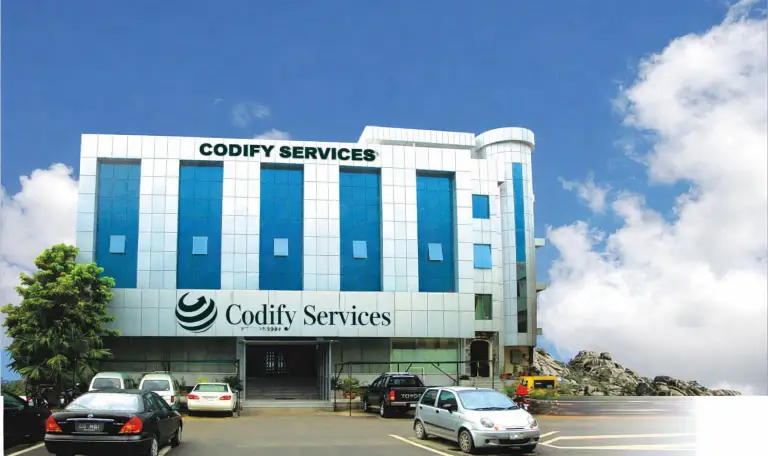
Codify Services provides technology solutions for organizations that want to digitize property and real estate operations.
Our software solutions include:
Housing Society Management Software
Designed around the requirements of housing societies and residential communities.
Property Management Software
Designed to help manage property-related records, operations, billing, payments, maintenance and reporting.
Real Estate Software
Designed for real estate businesses, builders and developers that require property, sales, customer and financial management.
Codify Services also provides:
- Software Development
- Web Development
- App Development
- Game Development
- SEO
- Digital Marketing
This allows businesses to work with one technology partner for both software and digital requirements.
Custom Property Management Software
Off-the-shelf software does not always match every organization’s workflow.
Custom property management software can be developed around specific requirements.
For example, a company may need:
- Custom property modules
- Custom billing rules
- Custom installment plans
- Custom accounting workflows
- Custom reports
- Customer portal
- Resident application
- Payment integration
- WhatsApp integration
- API integrations
- Multi-project management
- Custom approval workflows
Custom development can be particularly useful for large organizations with unique operational requirements.
Codify Services can evaluate the business process and develop or customize software according to the organization’s requirements.
Property Management Software vs Custom Software
| Factor | Standard Software | Custom Software |
|---|---|---|
| Deployment | Usually faster | Requires development |
| Customization | Limited/configurable | High |
| Initial cost | Often lower | Usually higher |
| Workflow flexibility | Moderate | High |
| Unique requirements | May be difficult | Easier to support |
| Integrations | Depends on vendor | Can be developed |
| Long-term control | Vendor dependent | Greater control |
Neither option is universally better.
The right choice depends on the organization’s size, budget, workflow complexity and long-term technology strategy.
Future of Property Management Systems
Property management is becoming increasingly digital.
Future systems are likely to place greater emphasis on:
- Cloud platforms
- Mobile applications
- Digital payments
- Automated notifications
- Resident portals
- AI-assisted reporting
- Predictive maintenance
- Data analytics
- Digital documentation
- API integrations
- Automated workflows
Artificial intelligence can potentially help management identify trends in:
- Rent collection
- Property occupancy
- Payment delays
- Maintenance requirements
- Complaint patterns
- Revenue
- Expenses
The future of property management is therefore not simply about storing property records.
It is about using technology to make property operations more connected, measurable and efficient.
Property Management System Checklist
Before selecting a system, use the following checklist:
- Property management
- Property inventory
- Owner management
- Tenant management
- Rental management
- Lease management
- Rent collection
- Billing
- Payment tracking
- Accounting
- Customer ledger
- Installment management
- Property booking
- CRM
- Maintenance management
- Complaint management
- Visitor management
- Property transfer
- NOC management
- Document management
- Vendor management
- Staff management
- Reports
- Dashboard
- User permissions
- Backup
- Security
- Mobile access
- Integrations
- Customization
- Data migration
- Training
- Technical support
- Scalability
Frequently Asked Questions
What is a property management system?
A property management system is software that helps organizations manage properties, owners, tenants, rent, billing, payments, maintenance, documents, accounting and reporting from a centralized platform.
What is the difference between a property management system and property management software?
The terms are often used interchangeably. A property management system may refer to a broader platform that connects multiple property-management functions, while property management software can refer to either a complete platform or a specific application.
Who uses property management systems?
Property owners, landlords, property management companies, housing societies, builders, real estate developers, commercial property managers and apartment communities can use property management systems.
Can a property management system manage tenants?
Yes. A suitable system can maintain tenant profiles, properties, lease information, rent, payments, outstanding amounts, documents and other relevant records.
Can property management software manage rent collection?
Yes. Property management software can track rent invoices, due dates, payments, outstanding amounts and payment history. Some platforms can also integrate digital payment methods.
Can property management systems manage housing societies?
Yes, provided the software includes society-specific functionality such as plot management, member management, installments, billing, accounting, complaints, maintenance, visitors, transfers and NOCs.
Can property management software manage installments?
Yes. Installment management can be used by real estate developers and housing societies to track payment plans, due dates, payments, outstanding amounts and recovery.
Does property management software include accounting?
Many comprehensive systems include accounting functionality or integrate with accounting systems. Organizations should verify the exact accounting modules before purchasing.
Can property management software manage maintenance?
Yes. A maintenance module can allow staff to register requests, assign work, track progress and record completion.
Can a property management system manage complaints?
Yes. A complaint management module can record complaints, assign them to staff, monitor status and maintain resolution history.
Can property management software manage property transfers?
A suitable system can manage property transfer workflows, ownership information, transfer charges, documents and approval status.
Is a property management system suitable for real estate developers?
Yes. Developers can use property management and real estate ERP solutions for inventory, booking, customer management, installments, recovery, accounting, sales and property transfers.
Is a property management system useful for small businesses?
Yes, but the system should be appropriately scaled. Small businesses should avoid paying for unnecessary complexity while ensuring the software can support future growth.
How much does a property management system cost?
The cost varies according to properties, users, modules, customization, integrations, hosting, data migration and support requirements. A customized quotation is more accurate than a universal price.
Is cloud-based property management software better?
Cloud-based software can provide remote access, centralized management and easier scalability, but businesses should still evaluate security, backups, hosting, availability and data ownership.
Can Codify Services develop custom property management software?
Yes. Codify Services provides software development along with property management, housing society and real estate software solutions. Custom modules, workflows, integrations and reports can be discussed according to business requirements.
What should I check before buying property management software?
Evaluate property management, tenants, owners, billing, payments, accounting, maintenance, reporting, security, user permissions, integrations, customization, scalability, data migration, training and technical support.
Conclusion
A property management system can transform the way property owners, property managers, housing societies, builders and real estate companies organize their operations.
Instead of relying on disconnected spreadsheets, paper files and separate processes, organizations can use a centralized platform to connect:
Properties → Owners → Tenants → Bookings → Billing → Payments → Accounting → Maintenance → Complaints → Documents → Reporting
For housing societies, the system can be expanded into a broader housing society management platform covering plots, members, installments, billing, accounting, complaints, maintenance, visitors, transfers and NOCs.
For real estate developers, it can connect leads, property inventory, bookings, installments, recovery, sales and accounting.
For rental property managers, it can connect tenants, leases, rent collection, maintenance and owner reporting.
The most important factor is not simply choosing the software with the largest feature list.
The right property management system should match your organization’s actual workflow, provide appropriate security and permissions, scale with your business and offer reliable implementation and support.
Codify Services provides property management software, housing society management software and real estate software, as well as custom software development, web development, app development, SEO and digital marketing services.
If your organization is planning to digitize property operations, the best first step is to map your current workflow, identify operational problems and request a practical software demonstration based on your actual requirements.
Ready to modernize your property management operations? Contact Codify Services for a software consultation and explore a property management solution designed around your business requirements.